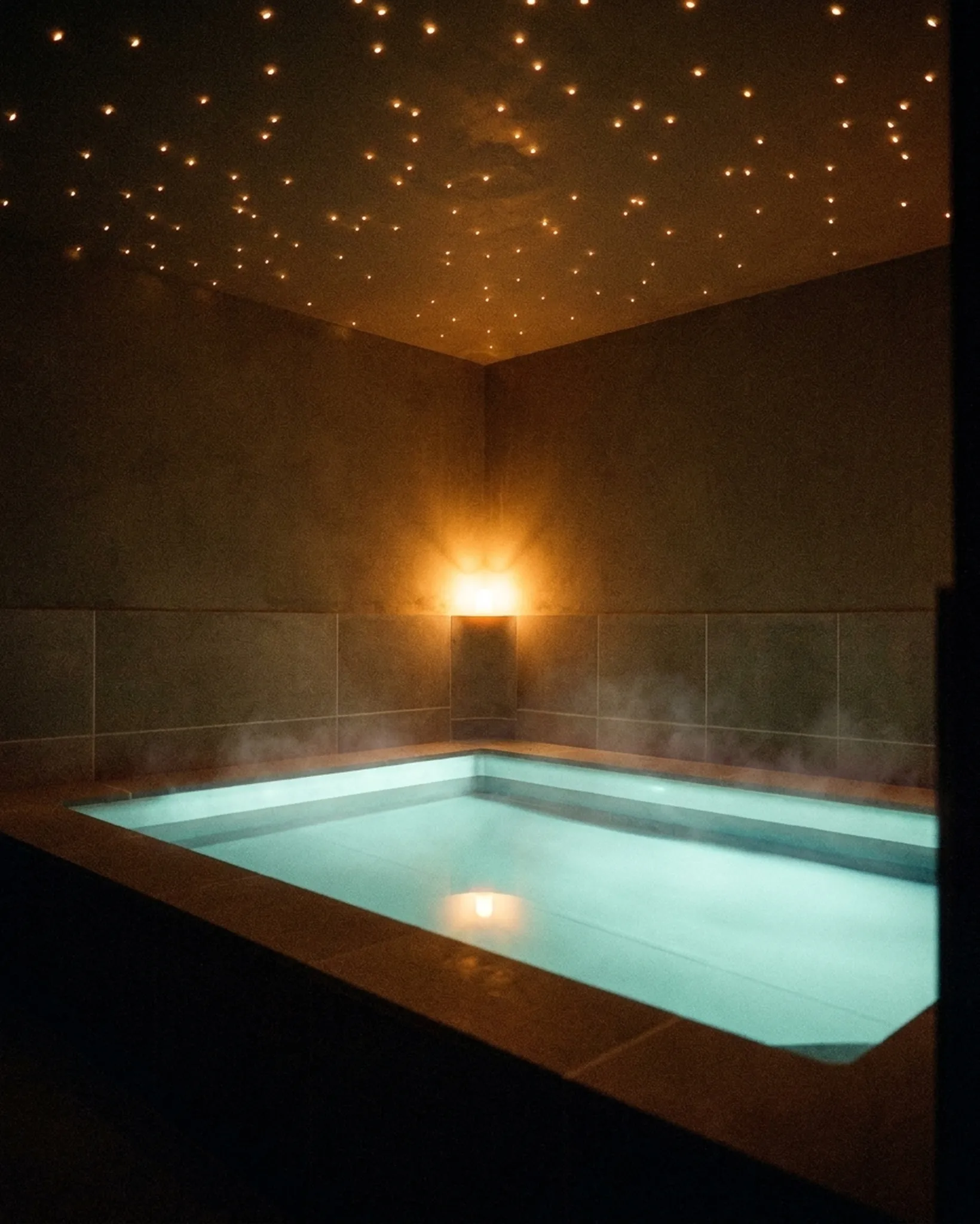
Contrast therapy — the deliberate movement between heat and cold — is the oldest idea in the bathhouse, and the one modern recovery science keeps confirming. The pattern is simple: warm the body until it softens, cool it until it wakes, rest until it settles. Repeat.
What the heat does
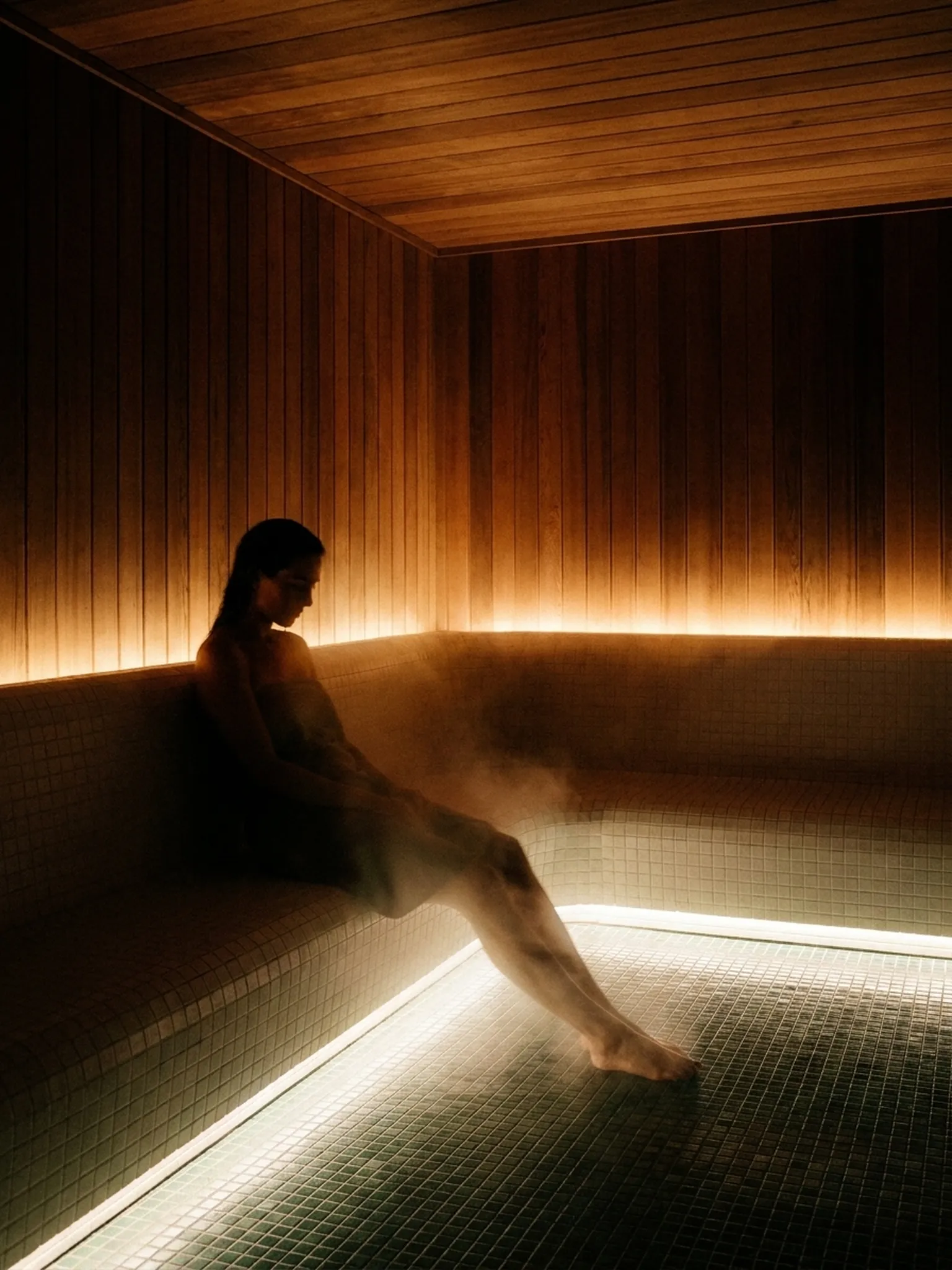
In the sauna, your core temperature rises and blood vessels dilate. Circulation increases, muscles loosen, and the nervous system begins to downshift. By the second round, most guests describe the feeling as weight leaving the shoulders.
The cold plunge is where many of the most significant benefits of the circuit are produced.
Then the cold
Brief immersion in water between 7 and 12 degrees sets off a cascade of physiological responses: endorphins release, circulation surges, and the nervous system resets. It is uncomfortable for about eight seconds — and then it is something else entirely.
A circuit to start with
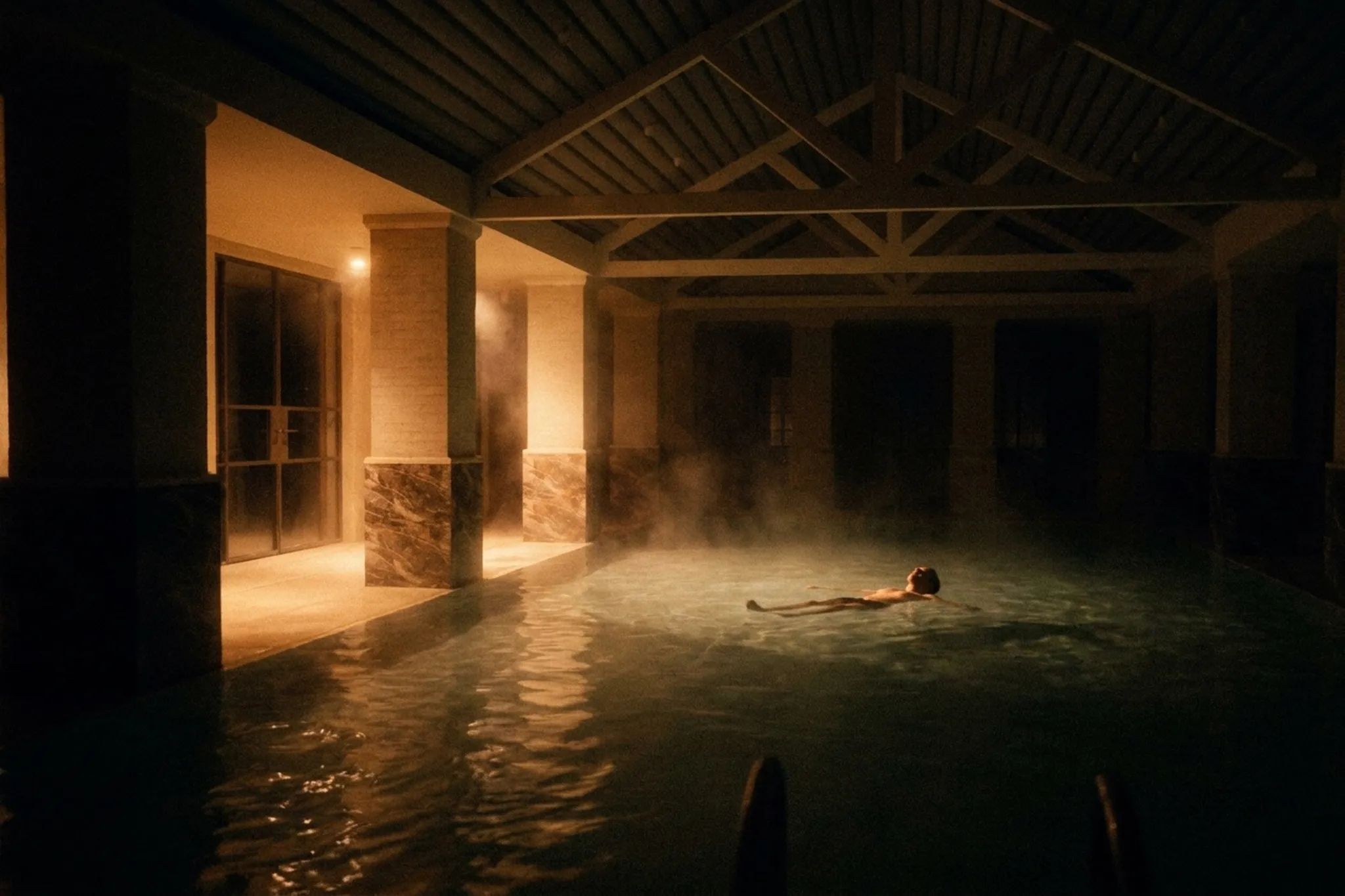
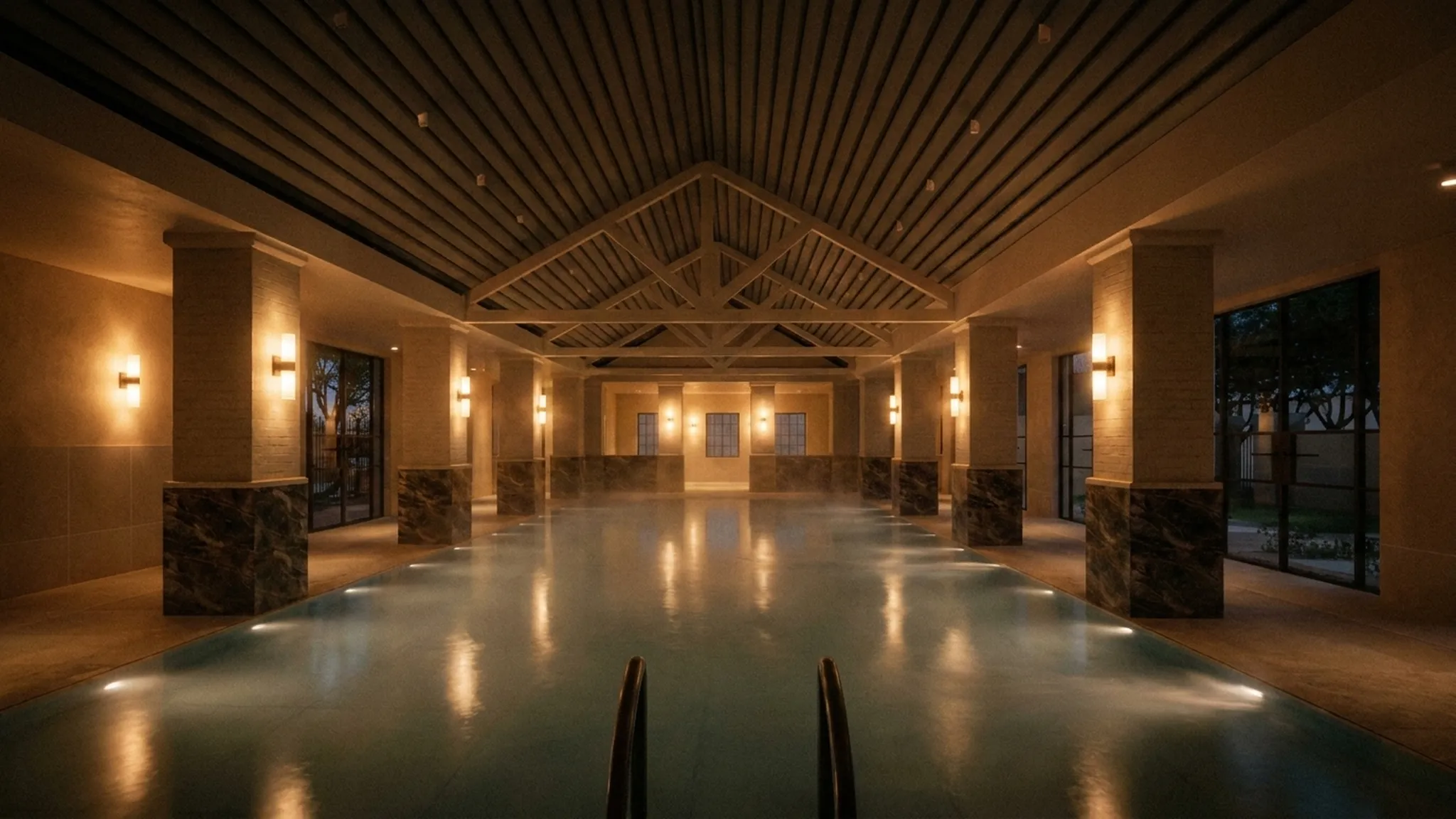
- Begin in the mineral pools until you feel your breathing slow
- Move to the steam room or cedar sauna — 10 to 15 minutes
- Cold plunge: 30 seconds to 2 minutes, exhale first
- Rest in the relaxation lounge before the next round
Like most things at VELA, the circuit rewards patience. Come often enough and it stops being a protocol — it becomes a practice.

Wellness insights and offers
Receive stories, rituals, and member-only news from VELA